 To become a distributor









22Oct
121 Views
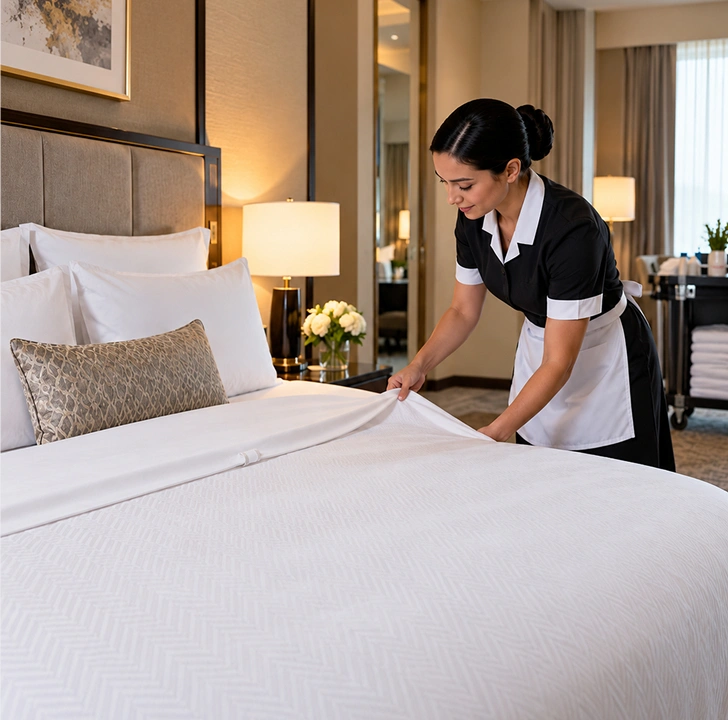
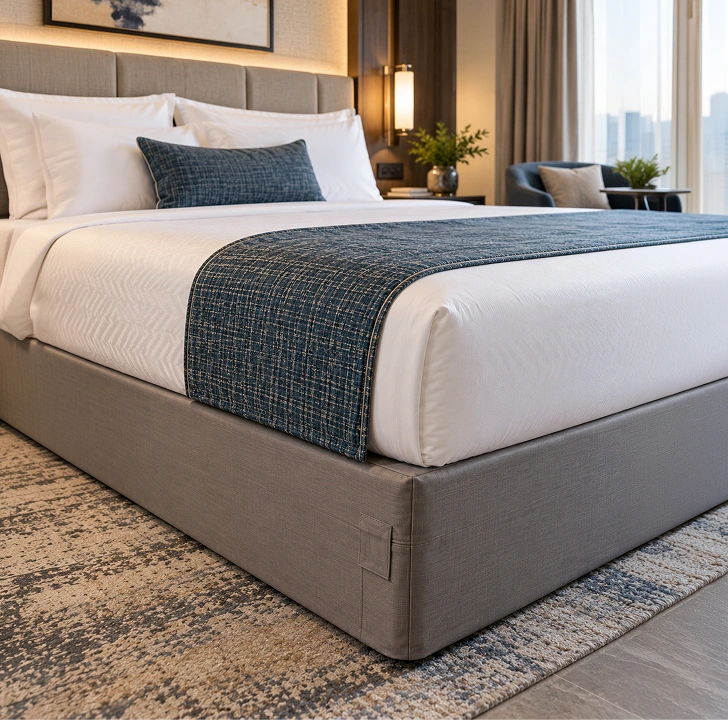
Your Hotel Bed Is Doing More Than You Think: The New Role of Hotel Top Sheets
For years, hotel bedding was treated mainly as a comfort purchase: clean sheets, a blanket, pillows, and something decorative on top.
That thinking is changing.
Today, hotel and motel owners are asking more practical questions.
- Can the bed look current without becoming harder for housekeeping to manage?
- Can one worn decorative element be replaced without replacing the whole bedding package?
- Will the fabric survive commercial laundering?
- Can the room photograph better without a full renovation?
That is where hotel top sheets have evolved from a decorative extra into part of a much more flexible top-of-bed system.
And in markets such as South Carolina—where Charleston, Columbia, Greenville and Myrtle Beach can have very different operating realities—that flexibility matters.
The top of the bed now has more work to do
South Carolina’s hotel market illustrates why one bedding formula no longer fits every property.
In Q2 2026, Charleston averaged about 80.3% occupancy, while upper-upscale and luxury ADRs exceeded $400. Columbia’s upscale occupancy reached 79.6% in April around major demand periods.
At the same time, drive-market and more price-sensitive segments have faced greater pressure. Calendar-year 2025 data showed approximately 71% occupancy in Charleston, 70% in Greenville and 52% in Myrtle Beach, with Myrtle Beach RevPAR down 6% from 2024.
The lesson for owners is simple: the bedding decision should match the property.
A premium hotel may use texture and layering to reinforce its positioning. A limited-service hotel may need something simpler—clean presentation, durability, easy laundering and controlled replacement cost.
Modern hotel top sheets help bridge those requirements.
Why the product has evolved
The traditional approach often relied on a more complete decorative bedspread or heavily layered bed.
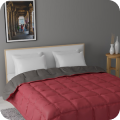
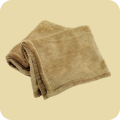
Today, the market increasingly offers a modular combination of decorative top sheets for hotels, Box Spring Covers, throws and bed runners / bed scarfs. Major hospitality suppliers now carry these pieces as separate but coordinating components, allowing properties to create a finished look without treating the entire bed as one product.
That evolution makes operational sense.
- If the room design changes, the owner may be able to update an accent rather than replace the complete bedding package.
- If a box spring shows wear, it can be covered rather than becoming a visual distraction.
- If a property wants a more distinctive look, a bed scarf can introduce color without covering the entire bed.
In other words, today’s top-of-bed program can be built in layers—and managed in layers.
Hotel top sheets should work for housekeeping too
Appearance gets the attention, but construction determines whether a product makes sense after the first few months.
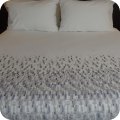
For example, AGH’s current decorative range includes polyester hotel top sheets with features such as snag- and wrinkle-resistant constructions, commercial wash instructions, sizing identifiers and center-position labels intended to help housekeeping place the sheet correctly. The Ariel style, for example, uses a color-coded center location tag and hidden hem thread for sizing, while the Ripple design uses a multi-ply T260 construction.
Those details sound small until a housekeeping team is making dozens- or hundreds- of beds.
An owner comparing hotel tops should therefore look beyond pattern and thread count. Ask how quickly the item can be identified, positioned, washed, dried and returned to service.
The cheapest decorative layer is not necessarily the lowest-cost one if it snags quickly, requires excessive finishing, or becomes difficult to match when replacements are needed.
Box Spring Covers can modernize the room without changing the bed
The foundation has also become part of room presentation.
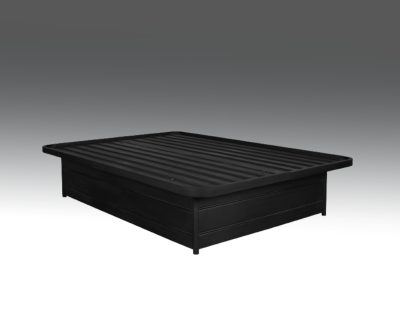
A worn box spring, exposed frame or dated bed skirt can make otherwise fresh bedding look tired. Modern Box Spring Covers offer a cleaner, more tailored alternative.
AGH’s Shantung covers, for example, use a slipcover-style construction, colorfast polyester and an inlay designed to help secure the cover and reduce shifting. They are offered in neutral hospitality colors and can coordinate with top sheets.
For owners, this creates another practical advantage: the base, top sheet and accent can be refreshed independently.
Bed runners are small pieces with a useful job
A bed runner / bed scarf should not exist merely because “hotels use them.”
Used well, it can give a room color and identity while keeping most of the bedding neutral. It can also provide a designated area at the foot of the bed where guests may place luggage or personal items rather than directly on the white bedding. Hospitality suppliers specifically position these products as both decorative accents and added protection for the bedding beneath.
That makes them useful for independent hotels and motels that want rooms to look distinctive online but do not want to rebuild the entire bedding program.
The sustainability conversation should start with operations—not green claims
There is a credible sustainability angle here, but hotels should avoid vague claims.
EPA data has estimated laundry at roughly 20% of hotel and motel water use, making laundering a meaningful operational area for conservation. EPA guidance also notes that linen and towel reuse programs can reduce laundry loads, while efficient laundering practices can cut both water and energy consumption.
Guest expectations are moving in the same direction. AHLA’s 2025 industry research found that roughly 60% of guests said they were more likely to choose hotels committed to key sustainability practices, including efficient water and energy use and waste reduction.
For top-of-bed products, sustainability therefore means making practical decisions: choose durable materials, avoid unnecessary replacement, follow the correct wash temperature, reduce avoidable finishing, and replace individual layers when appropriate instead of automatically replacing an entire bedding set.
Several AGH decorative top sheets, for example, specify low-temperature washing and drying and no ironing. That does not automatically make a product “sustainable,” but lower-maintenance care requirements can be one useful consideration when evaluating the overall operating footprint.
Buy the bed as a system
The best hospitality supply decision is rarely about one attractive product.
Look at the complete room: white linen, decorative top sheet, mattress and foundation, Box Spring Covers, pillows, blanket and any bed runners / bed scarfs. Then ask whether the pieces work together visually and operationally.
For a South Carolina motel competing heavily on value, simplicity and durability may win. For a Charleston boutique or higher-rate property, a more layered presentation may justify the additional investment.
Better Choices, Better Results
The goal is not to make every bed look more expensive.
It is to make the bed look appropriate for the room, easier to maintain, and capable of staying presentable through real hotel use.
That is how hotel top sheets have evolved- from decoration sitting on top of the bed to one component of a smarter bedding system.
Explore our wholesale hotel bedding collection to find coordinating bedding essentials designed to help your property maintain a comfortable, professional, and well-presented guestroom.
Source Credits
- South Carolina hospitality performance: Colliers South Carolina Q2 2026 Hospitality Market Report and CoStar/STR comparative market data. Colliers
- U.S. hotel sustainability and guest sentiment: American Hotel & Lodging Association 2025 State of the Industry research. AHLA
- Hotel water and laundry efficiency: U.S. EPA WaterSense hospitality guidance. EPA NEO
- Product and bedding-system references: AGH Supply decorative top sheets and box spring covers; broader U.S. hospitality-supply market references reviewed for category trends.
Frequently Asked Questions
01 What are hotel top sheets, and why do hotels use them?
Hotel top sheets are decorative bedding layers used to give guest beds a coordinated, finished appearance. In hospitality settings, buyers may also evaluate them for durability, ease of commercial laundering, housekeeping efficiency and compatibility with box spring covers and bed runners. The right choice depends on the property's design standards, operating requirements and replacement budget.
02 Which materials are suitable for hotel top sheets used in frequent commercial laundering?
Polyester is a common option for decorative hotel top sheets because it can offer practical care requirements, color retention, and resistance to wrinkling, depending on the construction. Procurement managers should compare fabric weight, stitching, care instructions, and verified performance claims. The best choice is one that suits the property's laundry process and presentation standards.
03 What is the difference between hotel top sheets, bed runners, and bed scarves?
Decorative hotel top sheets generally provide a broader layer across the bed, while bed runners and bed scarves are narrower accents typically placed across the foot of the bed. Each serves a different styling purpose. Hotels can combine these products with coordinated box spring covers to create a consistent appearance without replacing all their linens.
04 Are hotel top sheets a cost-effective alternative to replacing an entire bedding set?
They can be, particularly when the underlying white linens remain serviceable and only the decorative appearance needs updating. Hotels may replace individual layers instead of purchasing complete bedding packages. However, procurement teams should compare purchase price, expected service life, laundering requirements, and replacement availability to determine the actual long-term value.
05 How should hotels compare the quality of hotel top sheets beyond thread count?
Thread count alone does not establish whether a decorative top sheet will perform well in a hotel. Buyers should examine fabric construction, stitching, snag resistance, wrinkle performance, colorfastness, dimensions, and manufacturer care instructions. Requesting product samples and testing them under normal housekeeping and laundering conditions can help identify suitable products before bulk purchasing.
06 What should U.S. hotels consider when purchasing hotel top sheets in bulk?
U.S. hotels should consider the following factors when purchasing hotel top sheets in bulk:
-
1
Case Quantities: Check the number of sheets per case to match your property's requirements.
-
2
Unit Pricing: Compare bulk pricing and overall value without compromising product quality.
-
3
Product Specifications: Verify fabric, dimensions, durability, and commercial laundering requirements.
-
4
Lead Times: Confirm delivery schedules to avoid delays during peak occupancy periods.
-
5
Freight Costs: Include shipping and handling charges when calculating the total purchase cost.
-
6
Replenishment Availability: Choose products that can be reordered consistently to maintain uniformity across rooms.
Procurement teams should also verify that products meet the property's operational requirements and any applicable standards. Planning orders around occupancy patterns and expected replacement needs can help prevent shortages without tying up unnecessary inventory.
07 How can hotels evaluate the sustainability of decorative hotel top sheets?
Hotels should consider the following factors when evaluating the sustainability of decorative hotel top sheets:
-
1
Durability: Choose sheets that withstand frequent washing.
-
2
Replacement Frequency: Select long-lasting products to reduce waste.
-
3
Laundering Requirements: Follow care instructions to save resources.
-
4
Material Quality: Verify fabric composition and durability claims.
-
5
Water and Energy Use: Adopt efficient laundry practices.
-
6
Product Lifespan: Compare long-term performance and maintenance costs.
-
7
Certifications: Look for credible environmental certifications where applicable.