 To become a distributor







































23Oct
114 Views
Before You Order Another Hotel Trash Can, Ask These Questions
A guest walks into a freshly serviced room.
The bed is made. The bathroom shines. The towels are folded. Everything looks right.
Then they notice the trash can.
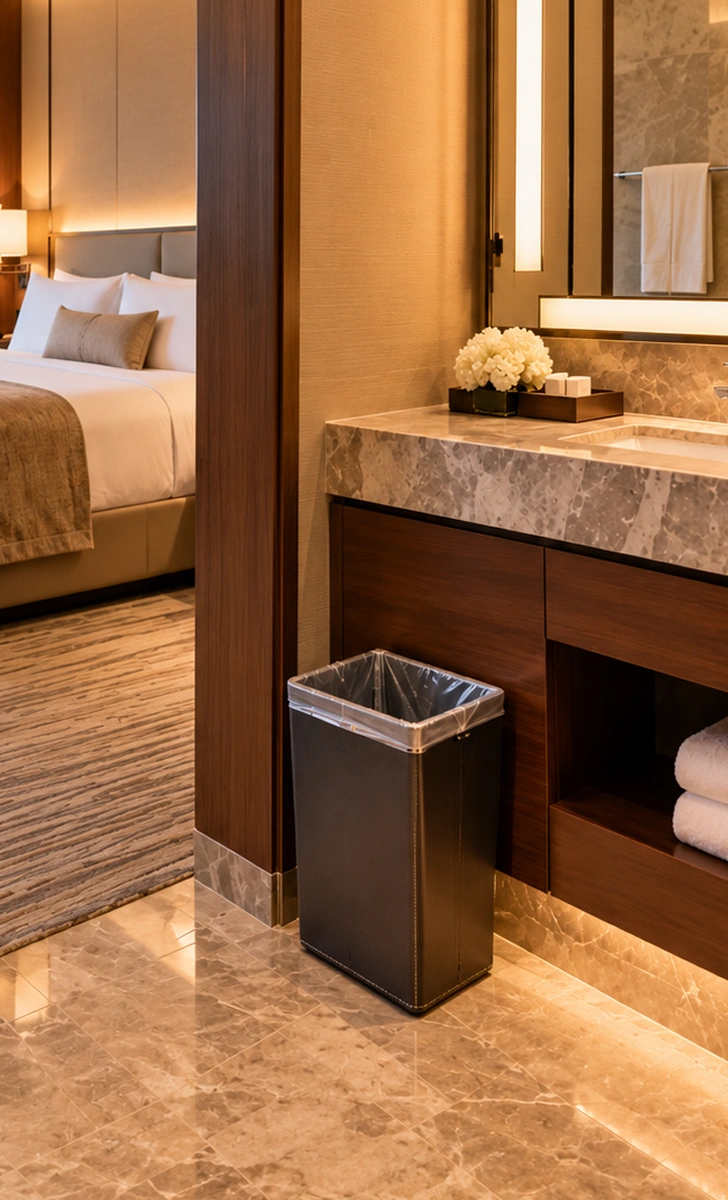
Maybe yesterday’s liner is still hanging over the rim. Maybe the bin is too small and already looks full. Maybe there is no liner at all and something has leaked into the bottom.
Suddenly, a room that was technically clean does not feel quite as clean.
That is the strange thing about hotel trash cans: guests rarely notice them when they work well. They notice them very quickly when they do not.
And for hotel and motel owners, particularly across busy South Carolina markets, that makes the humble wastebasket worth a little more thought.
The trash can is basic. The job it performs isn’t.
Hospitality has spent years upgrading mattresses, TVs, coffee programs, toiletries and room décor.
The hotel trash bin has evolved too—just much more quietly.
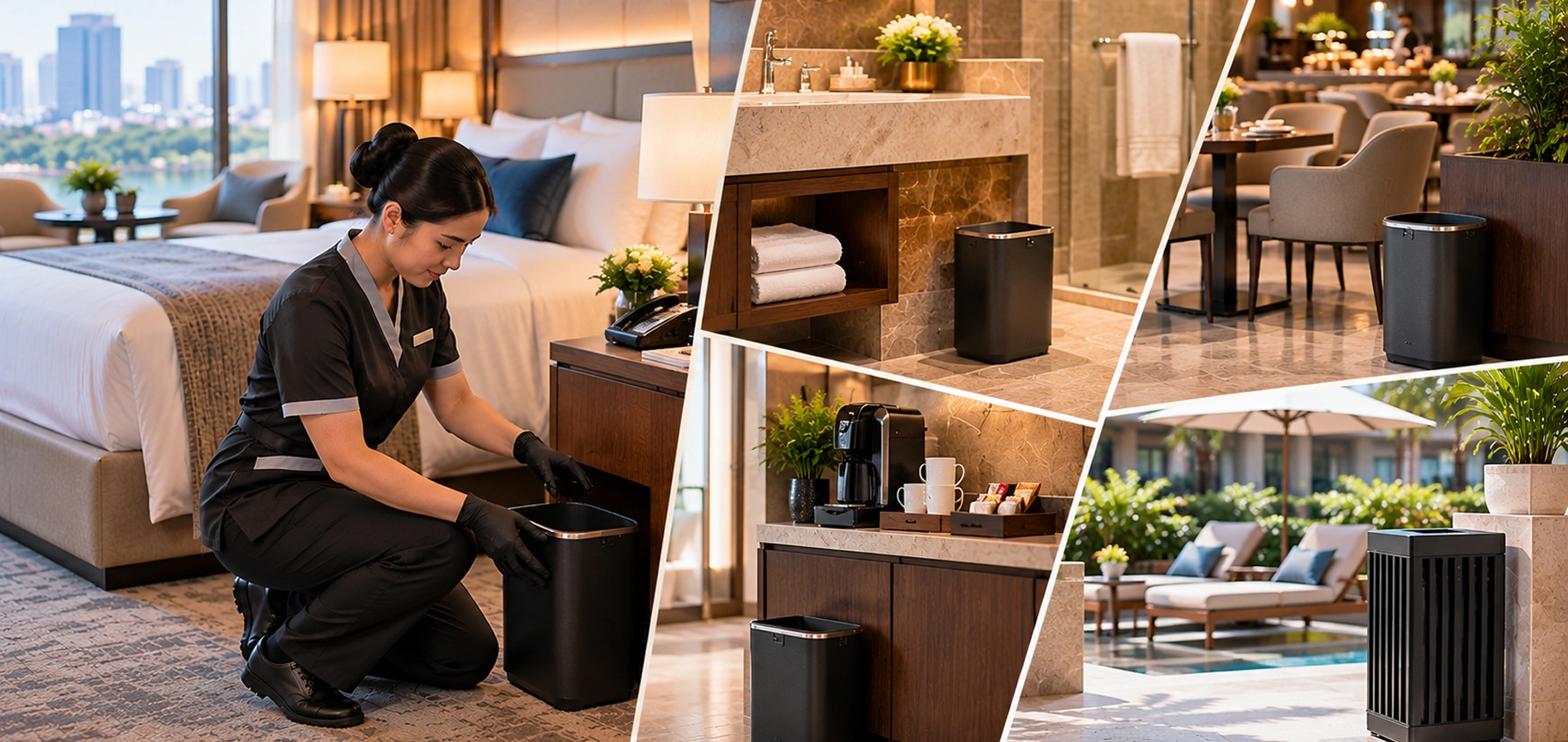
Older guestrooms often had one simple plastic basket beside the desk. Today, owners may need a compact bathroom bin, another near the desk or coffee area, recycling options, larger containers for breakfast areas, and completely different products for housekeeping or outdoor spaces.
There is a reason the category has expanded across major U.S. Hotel supply companies. Current hospitality ranges now include different capacities, finishes, fire-retardant models, recycling configurations and matching trash can liners rather than one generic wastebasket for every part of the property. AGH’s own current guest-room range, for example, includes 14-quart wastebaskets as well as fire-retardant options and separate can-liner categories.
The need changed because hotel operations changed.
Guests eat more meals in rooms. Takeout packaging is larger. Coffee cups travel upstairs. Extended-stay guests produce different waste from a one-night business traveler. And housekeeping teams are expected to turn rooms efficiently while maintaining very visible cleanliness standards.
In South Carolina, small operating decisions add up quickly
South Carolina tourism is now estimated to be a $31 billion industry, supporting roughly one in every 10 jobs in the state and generating about $3.2 billion in state and local taxes.
For an individual hotel owner, though, statewide billions are less meaningful than what happens on a busy Tuesday morning.
Charleston hotel occupancy averaged 80.3% in Q2 2026, while Columbia’s upscale occupancy reached 79.6% in April. Myrtle Beach, meanwhile, has been dealing with a softer and more price-sensitive environment.
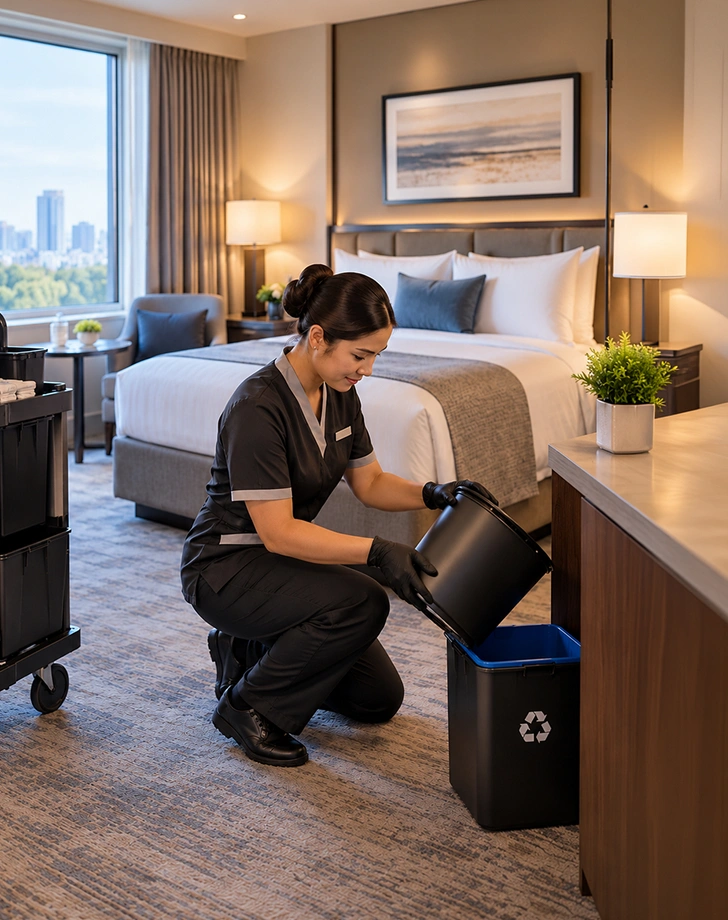
Different markets, same operational reality: every occupied room eventually becomes a room housekeeping has to reset.
Consider a simple example.
An 80-room motel running at 65% average occupancy turns roughly 19,000 occupied rooms in a year.
If one fresh plastic liner is used in every room every day, that can mean nearly 19,000 guestroom liners annually.
If two lined hotel room trash cans are changed every time, that number approaches 38,000.
That is before the breakfast room, lobby, housekeeping carts or exterior bins enter the picture.
Suddenly, choosing the right bin and liner does not feel quite so trivial.
Bigger is not automatically better
One mistake is choosing trash cans based only on purchase price or assuming that one size can work everywhere.
A large bin in a small bathroom can make the room look cramped. A tiny basket beside a coffee station may overflow with cups, takeout containers and bottles before checkout.
The same applies to trash can liners.
An oversized bag wastes material, looks untidy and may increase cost over thousands of changes. A bag that is too small slips down the container or tears when housekeeping removes it.
The better question is:
What kind of waste does this location actually receive?
A bathroom bin handling tissues and light dry waste has a different job from a breakfast-area trash can handling food, cups and liquid.
Owners do not necessarily need a premium product everywhere.
They need the right product in the right place.
That distinction can save more money than simply choosing the lowest unit price.
Cleanliness is partly about what the guest sees
Hotel owners already know that guests judge cleanliness quickly.
AHLA’s industry research continues to identify cleanliness as one of the fundamentals guests care about most when evaluating hotel experiences.
That does not mean guests are inspecting the specifications of a wastebasket.
They are noticing cues.
- Is the liner fresh?
- Is the bin empty?
- Are there marks around the rim?
- Does the bathroom look cared for?
- Does the room smell clean?
A hotel trash bin is therefore less about impressing somebody and more about avoiding the small signals that make a room feel neglected.
That is an important difference.
Sustainability gets more interesting when you look at the liner
The sustainability conversation around hotel trash cans is changing too.
The 2024 Green Lodging Trends Report—which benchmarked around 20,000 hotels globally—found that 78.3% of participating hotels had taken steps to eliminate in-room garbage bags and introduce alternative cleaning procedures, such as emptying and sanitizing the bin.
But there is an important detail: adoption among limited-service hotels was only 55.6%, compared with 82.9% among full-service properties.
That difference tells hotel owners something useful.
There is no universal sustainability answer.
Removing liners may work beautifully in one property. At another, it could create additional cleaning, sanitation or labor requirements that outweigh the benefit.
Sustainability should not mean following a trend because it sounds greener.
It should mean asking practical questions.
- Can some dry-waste bins operate without liners?
- Can the property reduce liner sizes?
- Can recycling be separated more effectively?
- Are staff replacing perfectly clean liners automatically when they do not need to?
- Would standardizing bin sizes reduce the number of liner SKUs sitting in storage?
Those are less glamorous sustainability initiatives.
They are also much more useful.
Maybe the best trash can is the one nobody remembers
There is no reason to overcomplicate this category.
A good hotel trash can needs to fit the room, handle the expected waste, clean easily and work with a sensible liner strategy.
That is it.
But when you multiply that decision across 50, 80 or 150 rooms and then across thousands of room turns every year, basic purchasing decisions become operating decisions.
The most effective Hotel supply choices often work exactly this way.
Guests may never compliment the wastebasket.
Housekeeping may never talk about the bin that fits properly or the liner that comes out easily.
And management may never hear about the room where everything simply worked.
Better Choices, Better Results
That is actually the goal.
Because in hospitality, some of the smartest products
are the ones guests never have to think about.
When the trash can disappears into a clean, well-run room, it is doing its job.
Source Credits
- South Carolina Department of Parks, Recreation & Tourism: South Carolina tourism economic-impact data, including the estimated $31 billion tourism economy, employment and tax contribution.
- Colliers, South Carolina Hospitality Market Report Q2 2026: Charleston, Columbia, Greenville-Spartanburg, Hilton Head/Beaufort and Myrtle Beach hotel-market performance.
- American Hotel & Lodging Association: 2025 State of the Industry and Partner Trends research on guest expectations, cleanliness and changing hotel operations.
- Greenview / Green Lodging Trends Report 2024: Hotel sustainability benchmarking and data on reducing or eliminating in-room plastic bin liners.
Frequently Asked Questions
01 What type of hotel trash can is best for guest rooms?
The best hotel trash can depends on room size, guest occupancy and expected waste volume. Compact indoor trashcans work well in bathrooms, while larger hotel wastebaskets may suit desks, coffee stations or extended-stay rooms. Hotel owners should prioritize easy cleaning, durable construction and compatibility with appropriately sized liners to support efficient housekeeping.
02 What is the ideal size for a hotel wastebasket?
A hotel wastebasket should accommodate typical guest waste without taking up excessive floor space. Smaller bins suit standard bathrooms, while larger options may work better for suites and extended-stay rooms. For example, a black wastebasket with compact dimensions and a sturdy build may suit specific hotel applications. Housekeeping managers should check room layouts and liner compatibility before purchasing in bulk.
03 How do hotels choose the correct can liner for a trash can?
Hotels should match liner dimensions and capacity to the wastebasket, ensuring the bag fits securely without slipping inside or tearing during removal. Housekeeping teams should also consider waste type and liner thickness. Testing compatible liners before placing a bulk order can prevent unnecessary material waste and recurring operational problems.
04 What features should hotels look for when buying durable trash cans?
Hotels should consider material quality, structural durability, ease of cleaning and resistance to staining or cracking. A suitable hotel trash can should withstand frequent handling by housekeeping staff without becoming difficult to maintain. Evaluating product specifications and expected service life helps procurement managers balance upfront cost with long-term operational reliability.
05 How can hotels choose the correct can liner for a trash can?
Hotel can liners should match the dimensions and capacity of the wastebasket to ensure a secure fit and prevent slipping or tearing during removal. Housekeeping teams should also consider the type of waste being collected and the liner’s thickness. Testing compatible liners before making bulk purchases can help reduce material waste, simplify handling, and control recurring supply costs.
06 What cleanliness standards should hotels consider when selecting guestroom waste bins?
Hotels should choose waste bins that are easy to clean, appropriate for their intended use and compatible with established housekeeping procedures. Staff should inspect bins for residue, odors, damage and visible marks during room servicing. Maintaining clean containers and replacing liners when appropriate helps reinforce the overall impression of a properly serviced guestroom.
07 How can hotels maintain a reliable supply of trash cans and liners?
Hotels can improve supply reliability by monitoring product consumption, setting reorder points and standardizing approved wastebaskets and liners where practical. Procurement teams should review supplier lead times and maintain appropriate replacement stock. Working with an experienced hospitality distributor can help coordinate bulk purchasing and reduce the risk of shortages affecting housekeeping operations.