 To become a distributor






































24Jun
7679 Views
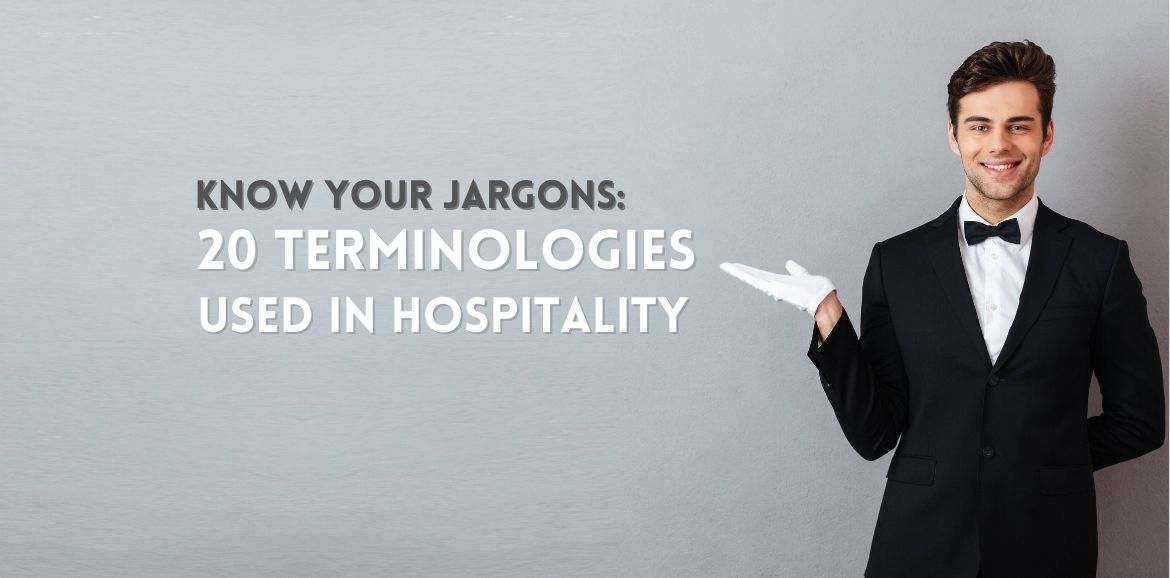
Know Your Jargons: 20 Terminologies Used in Hospitality
Over a period of time, every industry evolves its own language. From cuss words to anagrams to phrases to abbreviations, these often make work easier and quicker. Hotel industry or the hospitality industry too has its own language. Sample these: ADR, ARR, CRS, DDR, DND, ETA, and LOS.
You might know these. If you don’t, do not worry. You are not alone. This article has been written to introduce our hospitality brethren to some of these key words. Dealing with all abbreviations and phrases of the industry will need a book not a blog. Trust us.
So, without much ado, here are 20 abbreviations and phrases commonly used in the hospitality industry.
✯ Back of House
Area of the hotel that is generally off limits to guests. For example, kitchens, offices, storage etc.
✯ Advance Rates
Discounted rates to encourage customers to book in advance
✯ Boutique Hotels
Usually refers to luxury hotels that offer something unique in their service, amenities or room design.
✯ Corkage
Charge levied on beer, liquor, and wine brought into the hotel but purchased elsewhere. Such charges may also be applied to other products or services the hotel offers.
✯ Chatbot
Also known as a chatterbot, talkbot or artificial conversational entity, this is a service that simulates the behaviour of a human within a conversational environment.
✯ Day Guests
Guests that arrive and depart on the same day.
✯ Full Board
A special rate that includes bed, breakfast, lunch and, dinner.
✯ Fam Tour/Trip
Familiarisation tours or trips refers to complimentary stays organised for corporate guests who may be considering using the hotel for their organisation
✯ GDS
Global Distribution System – Network of electronic reservation systems used globally by travel agents to book hotel rooms. Come of the commonly used GDS include Sabre, Galileo and Amadeus.
✯ Green Hotels
This phrase refers to hotels making an active effort to operate sustainably and reduce their environmental impact.
✯ Geo-Coding
The process of identifying a hotels location using geographic coordinates expressed in degrees of longitude and latitude.
✯ House Count
The total occupancy of the hotel at any given moment.
✯ HEDNA
Short for Hotel Electronic Distribution Networking Association. Founded in 1991, HEDNA is an industry organisation dedicated to advance communication training, standards, procedures and technology for the sale of hotel accommodation through electronic systems.
✯ Lead Time
The time between when a booking is made and the actual stay. Generally, hotels prefer longer lead times so that they can prepare for the guests better.
✯ Meta-Search Engines
A search engine where different sites are consolidated so that offerings can be compared.
✯ Mystery Guest
A quality control measure wherein an undercover employee, usually from an external organisation, poses as a guest to evaluate the performance of the hotel.
✯ TAC
Travel Agent’s Commission
✯ Snag List
Usually a list of problems/issues that need to be addressed.
✯ Room Inventory
The number of rooms available to be sold
✯ ROH
Run of House – No room has been booked by guest before arrival, so they will get any room available.
Frequently Asked Questions
01 Why is understanding hospitality terminology important in hotel operations?
Hospitality terminology creates a common language for front desk teams, housekeeping staff, procurement managers, maintenance personnel, and hotel management. Using standardized hotel terminology reduces communication errors, speeds up daily operations, and helps hotels deliver a consistent guest experience across every department.
02 Which hospitality terminology should new hotel employees learn first?
New hotel employees should become familiar with commonly used hotel terminology such as Back of House (BOH), Room Inventory, House Count, ROH (Run of House), GDS, Lead Time, Full Board, and DND (Do Not Disturb). Understanding these terms improves onboarding, communication, and operational efficiency from day one.
03 How does hospitality terminology improve housekeeping operations?
Housekeeping staff use hospitality terminology to communicate room status, maintenance requests, cleaning schedules, and supply needs accurately. Understanding common hotel terminology helps reduce miscommunication between departments, speeds up room turnaround, and ensures guest rooms consistently meet cleanliness, safety, and service standards expected in hotels, motels, and resorts.
04 Why do procurement managers need to understand hotel terminology?
Procurement managers use hotel management terms to clearly communicate product specifications, inventory forecasts, and purchasing requirements with hospitality suppliers. Understanding hospitality terminology reduces ordering errors, streamlines bulk purchasing, improves inventory control, and ensures essential hotel supplies are available when needed, helping hotels maintain smooth daily operations and control long-term procurement costs.
05 How does hospitality terminology support better inventory management?
Terms such as Room Inventory, House Count, Lead Time, and Back of House help hotel teams monitor occupancy, manage stock levels, and coordinate supply replenishment. Consistent terminology enables departments to work together more efficiently and minimize operational disruptions.
06 Why is hospitality terminology important when working with hotel suppliers?
Standardized hospitality terminology enables hotels and hospitality suppliers to communicate product specifications, quality standards, delivery schedules, and purchasing requirements with clarity. A common industry language reduces ordering errors, minimizes supply delays, and strengthens long-term supplier relationships, helping hotels maintain efficient operations and consistent service quality across all departments.














Leave a Reply