 To become a distributor




























14Aug
194 Views
The Supply Closet Is a Profit Center: How Smarter Hospitality Supplies Protect Guest Experience, Labor, and Sustainability
Hotel owners often think about revenue in terms of occupancy, average daily rate, and direct bookings.
But profit can also disappear quietly inside the supply closet.
A towel that needs early replacement, a mattress protector that does not fit properly, an amenity dispenser that regularly leaks, or a mini refrigerator that creates repeated maintenance calls may appear to be a small purchasing issue. Multiply that issue across dozens of rooms and hundreds of guest stays, and it becomes an operational expense.
That is why purchasing hospitality supplies should not be treated as routine ordering.
It is a business decision involving guest satisfaction, housekeeping productivity, inventory control, sustainability, and total cost of ownership.
The U.S. Hotel Market Is Growing—but Costs Remain a Concern
U.S. hotel guest spending is projected to reach nearly $805 billion in 2026, an increase of approximately 1.7% over 2025. The lodging industry also accounts for roughly 1.3 billion guest nights annually. At the same time, hotel owners continue to report pressure from labor, insurance, energy, and supply costs.
South Carolina hotel and motel owners operate in an especially active tourism market. Travel and tourism contribute an estimated $31 billion to the state’s economy, support approximately one in every ten jobs, and generate around $3.2 billion in state and local taxes.
Properties in Myrtle Beach, Charleston, Hilton Head, Columbia, Greenville, Spartanburg, and smaller interstate markets serve very different guests—but they share one challenge: delivering a consistent room experience while controlling operating costs.
A 100-room property running at 70% occupancy records approximately 25,550 occupied room-nights annually.
For just one item used once per occupied room, a ten-cent difference in unit cost equals $2,555 per year.
That does not mean owners should always choose the lowest-priced product. It means small decisions deserve careful calculation.
Stop Buying Products in Isolation
The biggest purchasing mistake is evaluating every product as a separate line item.
Consider how products impact operations:
- A Towel affects laundry time.
- A bedsheet affects room presentation and replacement frequency.
- A mattress protector affects the usable life of a mattress.
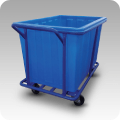
- A housekeeping cart affects staff movement and productivity.
- A coffee maker affects guest convenience and maintenance calls.
Effective wholesale hotel supplies work together as an operating system.
Before ordering, owners should ask:
- What problem must this product solve?
- How frequently will it be used, washed, handled, or replaced?
- Does it fit existing equipment and room layouts?
- Can the same specification be reordered consistently?
- What labor or maintenance does it create after purchase?
- How will it be stored and distributed?
The lowest invoice does not always produce the lowest operating cost.
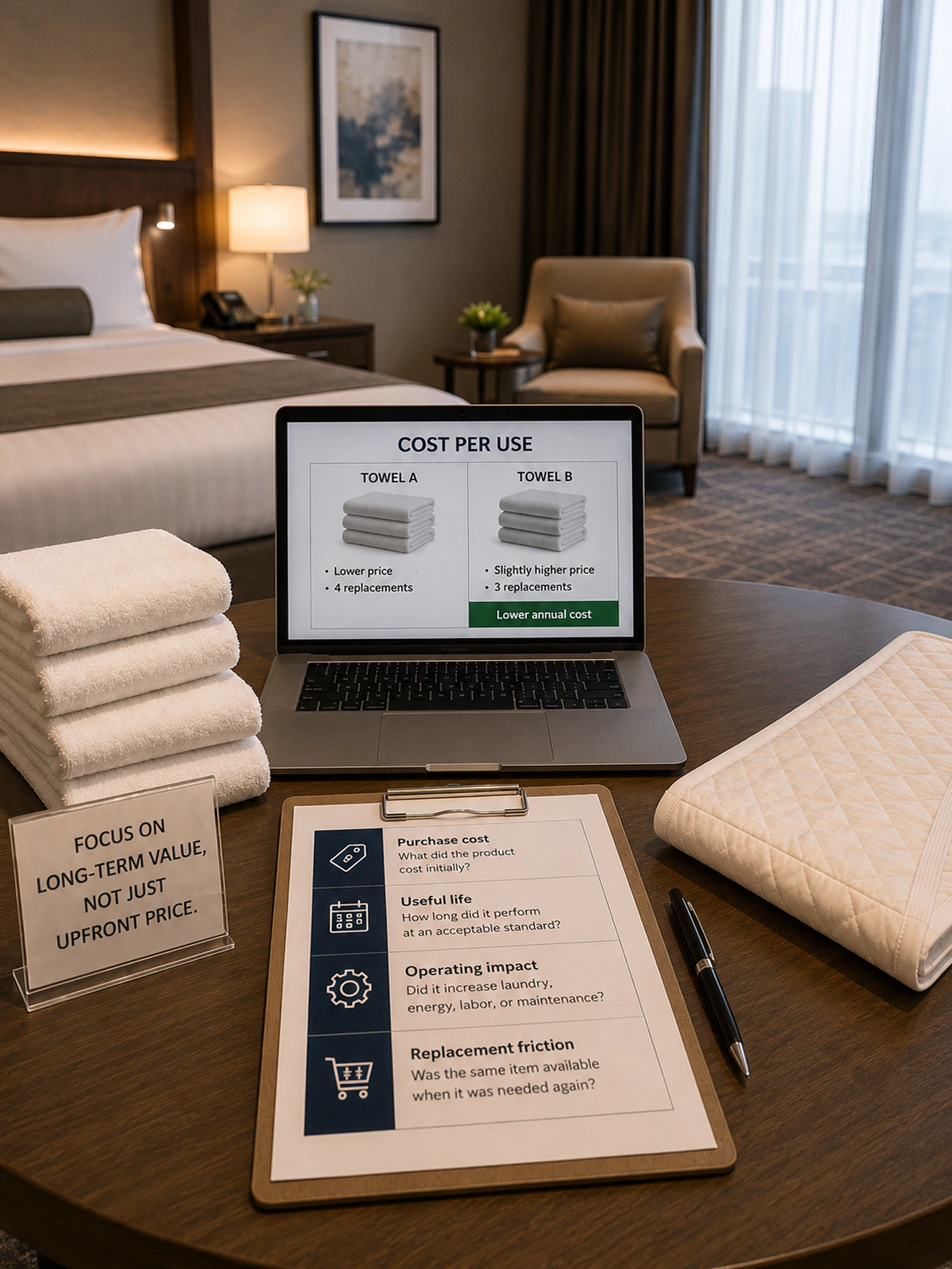
Build Purchasing Around Cost per Use
Price per case is easy to compare. Cost per use requires more thought.
Consider two towels:
- Towel A costs less but needs four replacements during a defined period.
- Towel B costs slightly more but requires only three replacements.
The higher-priced towel may deliver the lower annual cost.
The same principle applies across hospitality supplies. A durable iron, low-lint towel, commercial-grade hair dryer, properly fitted protector, or efficient refrigerator may reduce replacement orders, staff complaints, and room downtime.
Track at least four measures:
- Purchase cost: What did the product cost initially?
- Useful life: How long did it perform at an acceptable standard?
- Operating impact: Did it increase laundry, energy, labor, or maintenance?
- Replacement friction: Was the same item available when it was needed again?
This is especially important for independent properties that do not have large procurement departments.
A Large Catalog Is Not the Same as a Good Recommendation
The U.S. hospitality-supply market includes several established models.
Guest Supply offers a broad catalog covering linens, amenities, electronics, appliances, food service, housekeeping, furniture, maintenance, and other operating categories. National Hospitality Supply promotes more than 200 product categories, including towels, bedding, amenities, furniture, and draperies. Ramayan Supply also carries a wide assortment across bedding, bathroom amenities, guest-room products, housekeeping, and breakfast supplies. DZEE’s range is more strongly associated with hospitality textiles while also extending into amenities, housekeeping products, and hotel electronics.
Catalog breadth is useful. It can reduce the number of vendors and simplify ordering.
But more choice can also make selection harder.
A dependable hotel supply store should help an owner understand why one product suits a limited-service motel while another makes more sense for a resort, extended-stay property, or higher-ADR hotel.
Strong hospitality suppliers should not simply ask, “How many cases do you need?”
They should ask: “How will the property use this product?”
Sustainability Must Work Operationally
Sustainable procurement is no longer just about products that look environmentally friendly.
The EPA recommends evaluating products across their life cycle—from raw-material extraction and manufacturing through use and disposal. It also encourages buyers to consider energy, water, materials, packaging, chemical safety, and waste impact rather than relying on one environmental claim.
For hotels, a realistic sustainability strategy can include:
- Choosing durable linens that require fewer replacements
- Selecting efficient appliances and electronics
- Using refillable dispensers where practical
- Reducing unnecessary individual packaging
- Buying recycled-content paper products
- Standardizing inventory to reduce obsolete stock
- Using commercially compostable foodware only where an accepting composting program exists
- Working with suppliers that provide clear product specifications and certifications
The EPA specifically advises purchasing certified compostable food-service products only when a local commercial composting facility accepts them and the required collection or hauling service is available.
In other words, sustainability should be measurable and honest.
A product is not automatically the better environmental choice because it contains the word “green.” A long-lasting product that reduces repeat manufacturing, packaging, shipping, and disposal may sometimes create more practical value than a lower-quality product with attractive environmental messaging.
Create a Smarter Motel Supply Plan
A strong motel supply strategy does not require complicated software.
Begin by dividing products into three groups:
1
High-Use Consumables
These include soaps, tissues, coffee products, cups, trash liners, and breakfast supplies. Track average monthly consumption and maintain a sensible reorder point.
2
Wash-and-Reuse Products
Towels, sheets, pillowcases, blankets, and mattress pads should be monitored by replacement frequency, laundry performance, stains, shrinkage, and usable life.
3
Equipment and Long-Life Products
Hair dryers, irons, coffee makers, refrigerators, luggage racks, bed frames, and housekeeping carts should be evaluated through maintenance records, warranties, energy use, and room downtime.
Reviewing these groups quarterly can reveal where money is being lost.
Where AGH Supply Fits
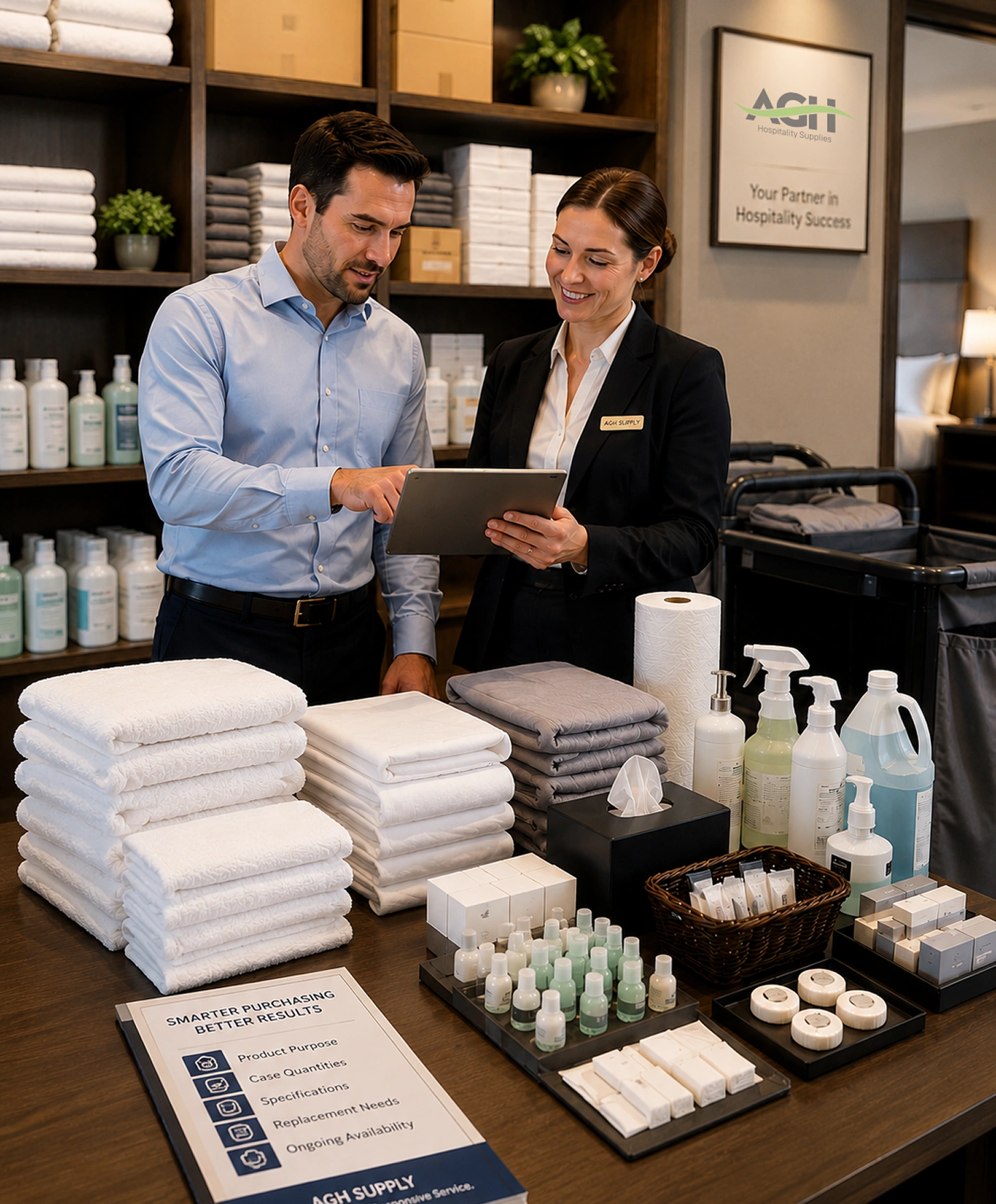
AGH Supply serves hotels and motels with commercial categories including towels, bedding and linens, guest amenities, cleaning products, paper products, electronics, hardware, and environmentally preferable options.
The realistic value is not claiming that every property needs the most expensive product.
It is helping owners compare product purpose, case quantities, specifications, replacement needs, and recurring availability before placing an order.
For South Carolina properties, having a responsive supplier that understands both regional operations and wider U.S. hospitality expectations can make restocking more predictable.
The Bottom Line
Guests do not see your purchase orders.
They experience the results.
They notice the towel, the bed, the coffee setup, the room electronics, the bathroom amenities, and the cleanliness of the property.
The right hospitality supplies should improve that experience without creating unnecessary work behind the scenes.
- Buy beyond the unit price.
- Measure cost per use.
- Standardize where possible.
- Verify sustainability claims.
- And choose products—and suppliers—that remain dependable after the first order.
That is how the supply closet stops being an expense center and starts protecting profitability.
Better Choices, Better Results
Ready to Make Smarter Choices?
If you are reviewing your guest-room amenities, compare your hotel supplies as long-term operational investments. That usually gives a clearer picture of what is helping your property perform well and what may need upgrading.
Source Credits:
• American Hotel &
Lodging Association, 2026 State of the Industry Report and industry economic data.
• South Carolina Department of Parks, Recreation & Tourism, state tourism
economic-impact information.
• U.S. Environmental Protection
Agency, greener purchasing, product life-cycle, and sustainable food-service guidance.
• AGH Supply, company and product-category information.
• Competitor-category research reviewed from Guest Supply, National Hospitality Supply, DZEE Textiles, and
Ramayan Supply.
Frequently Asked Questions
01 How can hotel procurement managers reduce costs when buying supplies in bulk?
Hotels should evaluate durability, cost per use, availability, product consistency, and suitability for daily operations. Procurement managers should consider how towels, bedding, guest-room amenities, cleaning supplies, and housekeeping equipment perform under high usage. In the U.S. hospitality market, reliable supply and consistent product specifications are often as important as purchase price.
02 What should hotels consider when purchasing wholesale hotel supplies?
Hotels should evaluate more than unit price when purchasing wholesale hotel supplies. Procurement managers should consider product durability, frequency of use, replacement needs, compatibility with existing equipment, storage, labor impact, maintenance, and supplier availability. A good purchasing decision should improve guest experience while controlling the property's long-term operating costs.
03 How does cost per use help hotels make better procurement decisions?
Cost per use helps hotels compare products based on their actual operating value rather than purchase price alone. A towel, mattress protector, or appliance that costs slightly more but lasts longer may reduce annual replacement costs. Hotel procurement managers should consider purchase price, useful life, operating impact, and replacement frequency when comparing products.
04 How can housekeeping staff benefit from better hotel supply purchasing?
Better purchasing can reduce unnecessary work for housekeeping staff by providing durable, properly specified, and consistently available products. For example, an efficient housekeeping cart can reduce staff movement, while durable towels and properly fitted bedding can reduce replacement and handling issues. Procurement decisions should consider how products affect room turnover and daily housekeeping productivity.
05 How does supplier reliability affect hotel procurement and operations?
Supplier reliability affects whether hotels can consistently maintain guest-room standards and avoid operational interruptions. If a replacement towel, bedding item, appliance, or amenity is unavailable, staff may need to find substitutes or delay maintenance. Hotels should evaluate suppliers based on product consistency, recurring availability, specifications, fulfillment reliability, and their ability to support bulk purchasing.