 To become a distributor




































24Aug
206 Views
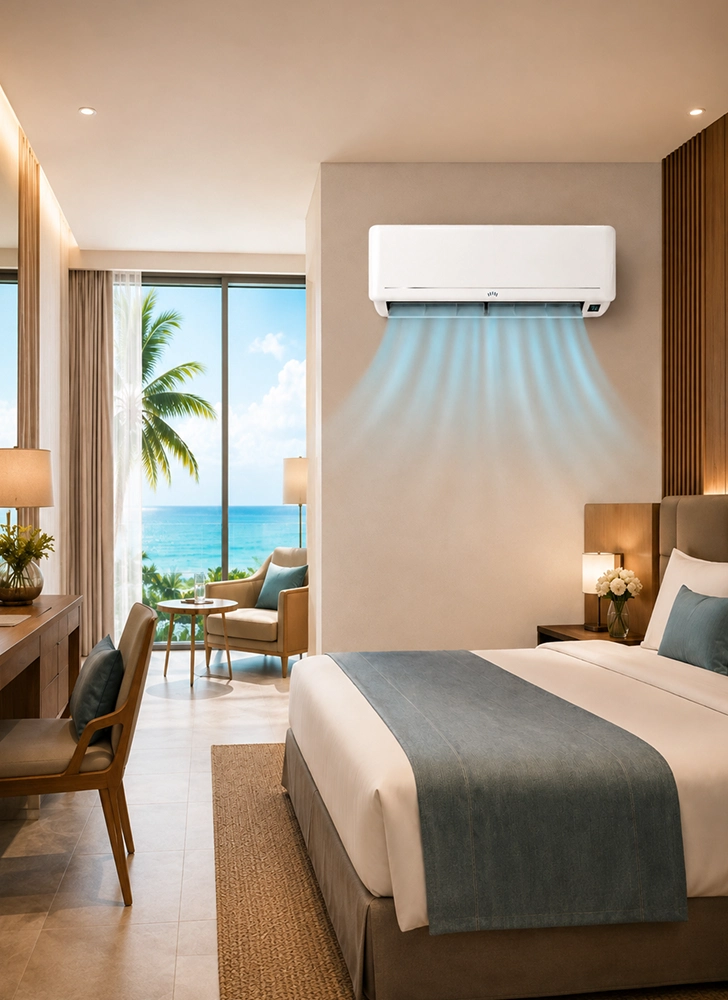
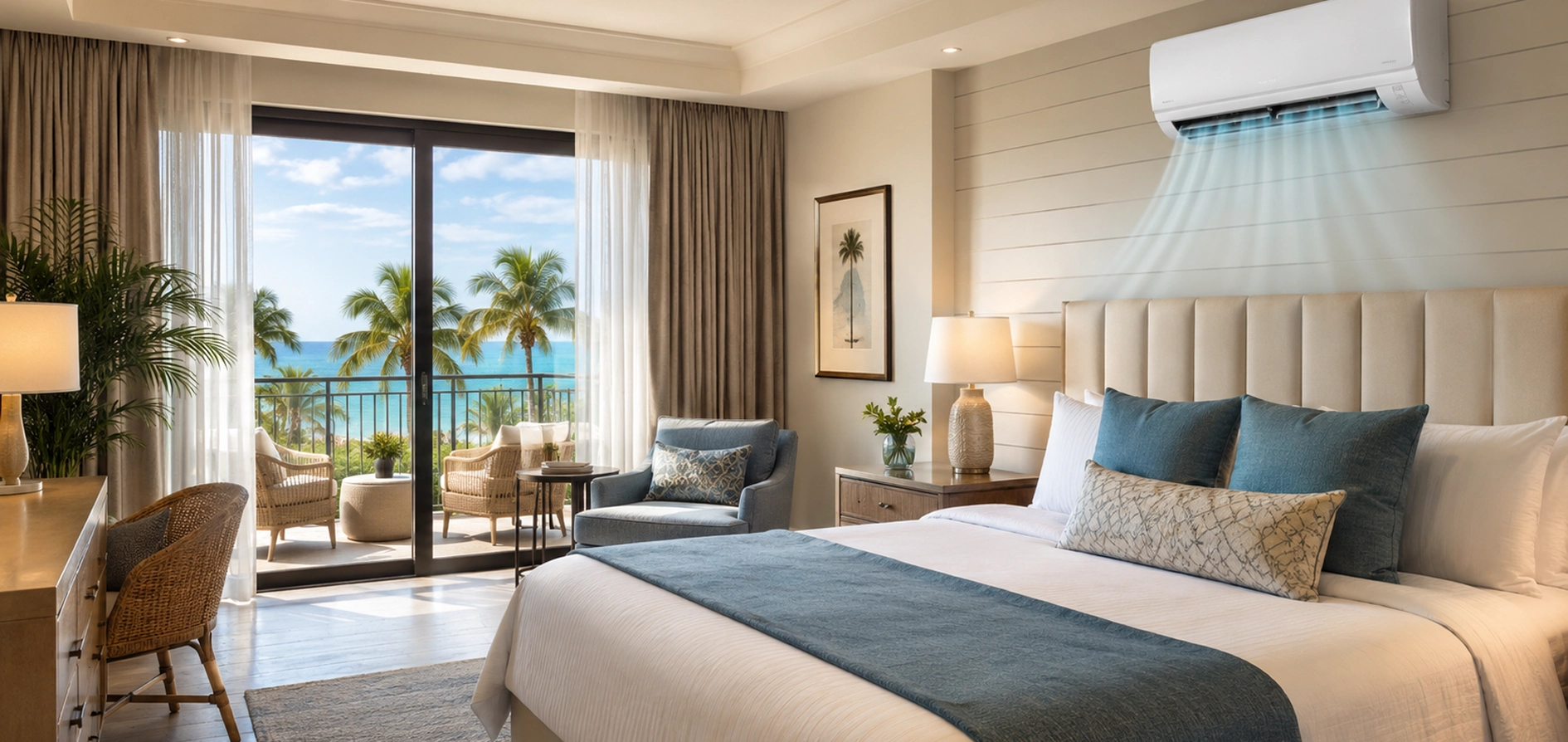
Comfort Is Revenue: Why the Right Hotel Air Conditioner Is an Operating Decision, Not Just an Equipment Purchase
A guest may forgive dated furniture.
They may overlook an older hallway carpet.
But if the room is hot, humid, noisy, or takes 30 minutes to cool down, the problem becomes immediate.
That is why a hotel air conditioner should never be treated as another appliance on a purchasing list. It directly affects guest comfort, online reviews, room availability, electricity consumption, maintenance calls, and ultimately the operating cost of every occupied room.
For hotel and motel owners, particularly in South Carolina, the better purchasing question is not:
“Which AC unit costs less?”
It is:
“Which unit will keep this room comfortable, reliably and efficiently, for years?”
That distinction matters more than ever. U.S. hotel guest spending is projected to reach nearly $805 billion in 2026, while elevated operating expenses continue to hold industry profitability below pre-pandemic levels. AHLA reports gross operating profit per available room at roughly 90% of 2019 levels.
In South Carolina, Air Conditioning Is Mission-Critical
South Carolina tourism is now estimated at $31 billion annually, supporting approximately 240,000 jobs and generating more than $3 billion in state and local taxes.
That creates tremendous opportunity for hotels in Myrtle Beach, Charleston, Hilton Head, Columbia, Greenville, Spartanburg, and along the state's interstate corridors.
It also creates a demanding operating environment.
South Carolina's summer weather regularly combines temperatures in the 90s with substantial humidity. During parts of June and July 2026, temperatures reached the mid-to-upper 90s and heat-index values exceeded 100°F.
For a guest arriving after several hours on the road, the hotel room air conditioner is not a secondary amenity.
It is part of the first impression.
Choosing the Right BTU Is More Important Than Choosing the Biggest Unit
A common assumption is:
More BTUs = better cooling.
Not necessarily.
An oversized hotel AC unit can cool a room quickly without running long enough to remove sufficient humidity. ENERGY STAR specifically warns that oversized air conditioners can leave rooms feeling cool but damp and uncomfortable.
That is especially relevant in the Southeast.
Capacity should reflect:
- Room square footage
- Ceiling height
- Sun exposure
- Window area
- Number of occupants
- Insulation
- Coastal versus inland location
- Heating requirements
- Existing wall sleeve and electrical setup
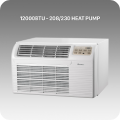
AGH Supply's current hospitality AC range reflects that need for choice, with 26-inch through-the-wall units and 42-inch E-TAC configurations offered across 7,000, 9,000, 12,000 and 15,000 BTU applications.
The goal isn't to buy the most powerful hotel room AC unit.
It's to buy the right capacity for the actual room.
PTAC, Through-the-Wall or Heat Pump?
Hotels often use packaged terminal air conditioners, through-the-wall systems, or packaged terminal heat pumps because individual rooms can control their own temperature.
The U.S. Department of Energy classifies PTACs and PTHPs as commercial/industrial equipment and has maintained federal energy-conservation standards for these systems since 1994.
For owners, the practical distinction matters.
A traditional unit may pair cooling with electric resistance heat.
A heat-pump model can provide both cooling and heating by reversing the refrigeration cycle, while retaining supplementary heat when needed.
For South Carolina's relatively mild winters, heat-pump technology may be worth evaluating because one motel air conditioner can serve both seasonal cooling and heating needs.
But product selection should always consider the property's climate, usage pattern, electrical capacity and replacement infrastructure—not simply the label “heat pump.”
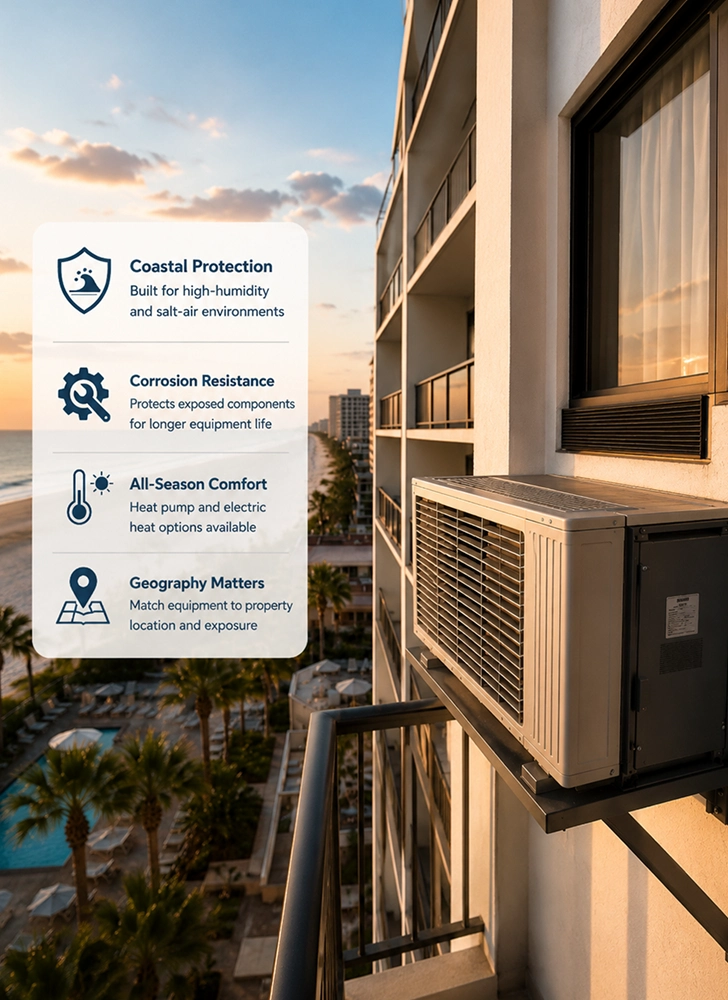
Coastal Properties Have Another Enemy: Corrosion
For Myrtle Beach, Hilton Head and other coastal properties, cooling capacity is only part of the conversation.
There is also salt air.
Coastal air can accelerate corrosion of exposed HVAC components, which makes equipment protection and maintenance particularly important.
AGH's current E-TAC II assortment includes Coastal Protection configurations designed specifically for high-humidity and coastal hotel environments, in both heat-pump and electric-heat versions.
That does not mean every South Carolina hotel needs coastal-protection equipment.
A Greenville property has different environmental exposure from an oceanfront Myrtle Beach property.
Procurement should match geography.
That is precisely why comparing specification sheets matters.
Don't Ignore Noise
A unit can cool perfectly and still create a guest complaint.
Why?
Because it sits only a few feet away from the bed.
Compressor cycling, fan vibration, rattling panels and abrupt startup noise may be far more noticeable at 2 a.m. than they are during a showroom demonstration.
Competitor catalogs highlight this issue as well. Guest Supply lists hotel-focused Amana through-the-wall systems emphasizing quiet operation, while newer PTAC products also promote quieter operation alongside heating, cooling and connectivity features.
Before replacing 50 or 100 units, test one hotel room air conditioner inside an actual guest room.
Listen to it.
Sleep near it if necessary.
The guest will.
Sustainability Begins With Energy, Sizing and Maintenance
Sustainable hotel operations do not begin with a green sticker.
They begin with equipment that uses energy responsibly and stays useful longer.
For conventional room ACs, ENERGY STAR-certified models are currently required to be roughly 19%–36% more energy-efficient than minimum federal standards, depending on configuration. ENERGY STAR also recommends features such as energy-saver modes, efficient compressors, proper sealing and appropriately sized equipment.
PTACs operate under separate DOE standards, so owners should compare the relevant efficiency ratings for the exact commercial unit rather than assuming residential ENERGY STAR numbers apply.
Sustainable AC management also means:
- Cleaning filters consistently
- Cleaning coils
- Maintaining correct airflow
- Inspecting seals and sleeves
- Using occupancy-aware thermostats where appropriate
- Repairing serviceable components instead of replacing entire units
- Selecting lower-global-warming-potential refrigerants where technically appropriate
- Replacing inefficient equipment strategically rather than waiting for emergency failure
Connected thermostats can create another opportunity. National Hospitality, for example, lists an occupancy-detection PTAC thermostat that claims heating and cooling energy reductions of up to 30% under appropriate conditions.
The key word is appropriate. Real savings depend on occupancy patterns, settings and installation.
Compare Suppliers by Specifications, Not Just Inventory
This is a category where established Hotel Motel supply companies take different approaches.
Guest Supply currently lists Amana and GE systems across several capacities, voltages and heating technologies. National Hospitality handles PTAC quotations by asking customers to provide the original model, cooling and heating BTUs, voltage, cord size and thermostat requirements.
That tells hotel owners something important:
Buying a hotel AC should be specification-driven.
Before ordering, confirm:
- BTU capacity
- Unit width
- Wall sleeve compatibility
- Voltage
- Amperage
- Heat type
- Thermostat compatibility
- Exterior grille requirements
- Refrigerant
- Warranty
- Replacement-part availability
A lower-priced unit that requires electrical changes, a new sleeve, additional accessories or unexpected installation work may quickly become the more expensive option.
Where AGH Supply Fits
AGH Supply currently offers selected commercial AC options rather than trying to present every HVAC configuration available in the market.
The range includes 26-inch T2600 through-the-wall systems, 42-inch E-TAC II units, heat-pump and electric-heat configurations, coastal-protection models and related accessories.
The useful role of a hospitality supplier is therefore not:
“Here is an AC. Buy it.”
It should be:
“Tell us your existing unit, room size, voltage, wall opening and operating environment. Then let's identify what actually fits.”
That approach reduces expensive mismatches.
The Bottom Line
Guests do not care how many BTUs you purchased.
They care whether the room feels comfortable when they walk in.
Owners should care about something more:
How reliably and efficiently that comfort can be delivered year after year.
The right hotel air conditioner should balance capacity, humidity control, noise, energy performance, serviceability and installation compatibility.
For South Carolina properties, add heat, humidity and—where relevant—coastal corrosion to that equation.
Don't buy the biggest unit.
Don't automatically buy the least expensive one.
Buy the unit that fits the room, the climate and the way your property actually operates.
That is where comfort becomes a smarter business decision.
Better Choices, Better Results
Ready to Make Smarter Choices?
If you are reviewing your guest-room cooling and heating setup, compare your AC requirements based on specifications and actual room dimensions. That ensures long-term comfort, energy efficiency, and reliable performance.
Source Credits
- American Hotel & Lodging Association — 2026 State of the Industry Report.
- South Carolina Department of Parks, Recreation & Tourism — Tourism Economic Impact and 2026 Tourism Industry Update.
- South Carolina State Climatology Office — 2026 summer temperature and humidity reports.
- U.S. Department of Energy — Packaged Terminal Air Conditioner and Heat Pump standards and guidance.
- ENERGY STAR — Room Air Conditioner efficiency, sizing and sustainability guidance.
- AGH Supply — 26-inch through-the-wall and 42-inch Coastal Protection E-TAC II product range.
- Competitor/product benchmarking — Guest Supply and National Hospitality Supply PTAC/HVAC ranges and specifications.
Frequently Asked Questions
01 What type of air conditioner is best for hotel rooms?
The best hotel air conditioner depends on room size, climate, wall-sleeve compatibility, heating requirements, electrical capacity, and expected usage. Hotels and motels commonly evaluate PTAC, PTHP, through-the-wall, and E-TAC systems. Procurement managers should compare capacity, reliability, noise, energy efficiency, maintenance requirements, and replacement compatibility rather than choosing solely on purchase price.
02 How do hotels choose the right BTU capacity for an air conditioner?
Hotels should consider room square footage, ceiling height, windows, sun exposure, insulation, occupancy, and local climate when selecting BTU capacity. Common hotel air conditioner options include 7,000, 9,000, 12,000, and 15,000 BTU configurations. An oversized unit may cool quickly but provide inadequate humidity control, particularly in warm, humid U.S. markets.
03 What type of air conditioner is best for coastal hotels and resorts?
Coastal hotels and resorts should consider equipment designed for environments exposed to humidity and salt air. Corrosion protection can help address the accelerated wear that coastal conditions may create. Properties in locations such as Myrtle Beach or Hilton Head should evaluate environmental exposure alongside cooling capacity, maintenance requirements, and equipment compatibility rather than assuming every coastal property needs the same configuration.
04 How long should a hotel air conditioner last?
The useful life of a hotel air conditioner depends on equipment quality, operating hours, climate, installation, maintenance, and repair practices. High-occupancy hotels may place substantially greater demands on room AC equipment than residential users. Maintaining filters, coils, airflow, controls, and electrical connections can help extend service life and delay costly emergency replacement.
05 How can hotels reduce air conditioner maintenance problems?
Regular filter cleaning, coil inspection, airflow checks, sleeve and grille inspections, and thermostat testing can help prevent avoidable hotel air conditioner problems. Housekeeping and maintenance staff should also document recurring issues such as unusual noise, poor cooling, leaks, or frequent service calls. Preventive maintenance can extend equipment life and reduce disruptive guest-room downtime.
06 Should hotels prioritize price or quality when buying air conditioners in bulk?
Hotels should evaluate total operating cost rather than purchase price alone. A lower-priced hotel air conditioner may become more expensive if it requires electrical modifications, incompatible sleeves, additional accessories, frequent repairs, or premature replacement. For multi-room properties, procurement managers should compare warranty, efficiency, parts availability, installation requirements, durability, and expected lifecycle cost.
07 How can hotels improve the energy efficiency of guest-room air conditioning?
Hotels can improve AC efficiency through appropriate sizing, regular maintenance, clean filters and coils, proper sealing, efficient equipment, and occupancy-aware temperature controls. Maintenance teams should also investigate rooms with unusually high energy use or repeated cooling complaints. Energy savings depend on equipment, installation, climate, occupancy patterns, thermostat settings, and ongoing maintenance—not simply the AC model.